In bygone days, nothing was discarded easily. Our parents and ancestors believed in
simple living and were happier than us in the process. In large families, school uniforms,
shoes, and school bags were handed down from one child to the other. A friend recalls
how her mother would give a new look to her sole party dress as she grew taller. A frill
below, a ribbon or two, and the dress looked quite presentable. In order to keep up with
their peer group, today's children insist on everything new, even if their parents cannot
afford new items. I remember my mother transforming used saris into half curtains for
the windows.
Have you noticed that white goods purchased today do not have the same quality as
those purchased, say, fifteen years ago? The old fridges and air conditioners were sturdy
and trouble-free. Similar products from reputed companies today cost a lot but don't
last for a long time. Earlier, mobile phones lasted for around five years. Today's fancier
versions last for two or three years. The same goes for computers. In other words,
consumers are being taken for a ride. Companies deliberately lower the quality of goods
to increase profits.
It is opined that the throwaway culture began with the planned obsolescence of the
Phoebus cartel of light bulb manufacturers in Europe and North America from 1925 to
1939. This cartel, consisting of reputed companies, hit upon the idea of decreasing the
life of light bulbs, thus ensuring repeat sales. They even tested the bulbs in a central
laboratory to ensure that their lifespan was shortened. Previously, bulbs lasted for
2,500 hours. The new bulbs lasted for 1,000 hours. This increased wastage, but the
companies with myopic vision focused on profitability.
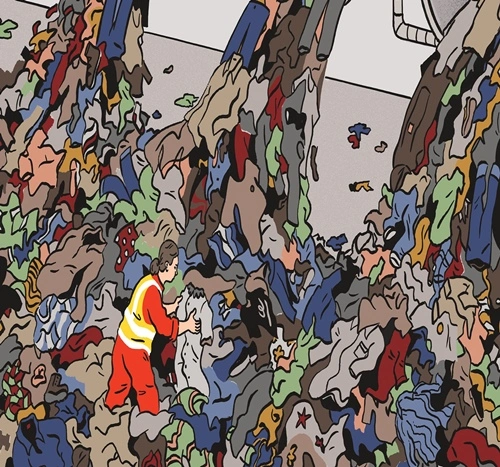
This tactic has resulted in the use-and-throw culture, resulting in massive garbage
dumps and increased pollution. We dump clothes, shoes, mixers, microwaves,
computers, and irons. The clothing industry is a major culprit. Through a blitzkrieg of
advertisements, we are convinced that we must jettison our clothes and replace them
with the latest fashion, even if we can't afford the designer garments.
Similarly, the cosmetic industry convinces us that we could look young and beautiful
forever. We all want to be praised by our peer group and follow trends without
weighing the consequences. My daughter Minal had a college classmate who came from
a poor background. At that time, film stars were wearing coloured contact lenses. They
sported brown eyes on one day and green eyes the next day. This young girl tried to
copy them and bought cheap coloured contact lenses. Unfortunately, she caught an eye
infection and lost an eye as a consequence.
The trappings of money have become the new status symbol. Our roads are not meant
for large SUVs, and the parking problems make it worse. Consumers are falling prey to
what is termed perceived obsolescence. The onslaught of advertisers is insidious. They
imply that old products are inferior. After all, in this materialistic age, we feel that our
ego will go for a toss if we stick to old products.
To counteract this wasteful trend, we need to ask ourselves the following questions
before buying a product:
● Do I really need it, or am I buying it to satisfy my ego?
● Is it possible to get my old fridge/air conditioner/microwave oven repaired?
● Am I just throwing electronic goods in the dustbin? Am I acting responsibly? This
will create pollution issues when they leak into the soil. There are separate bins
for electronic waste in some places.
● Instead of just throwing our old clothes and sheets into a bin, am I donating these
items instead?
The throwaway culture is not merely an economic or environmental issue—it is a
mirror reflecting our values as a society. Every discarded phone, every prematurely
retired appliance, every closet purged of last seasons clothes represents a choice weve
made about what matters to us. We stand at a crossroads where convenience battles
sustainability, where ego confronts conscience. The wisdom of our ancestors, who
found contentment in simplicity and pride in preservation, offers us a path forward. But
walking that path requires courage—the courage to resist the siren call of endless
consumption, to repair rather than replace, to value longevity over novelty. The
question is not whether we can afford to change our habits, but whether we can afford
not to. For in the end, what we throw away is not just material goods, but our
responsibility to future generations who will inherit the consequences of our choices.