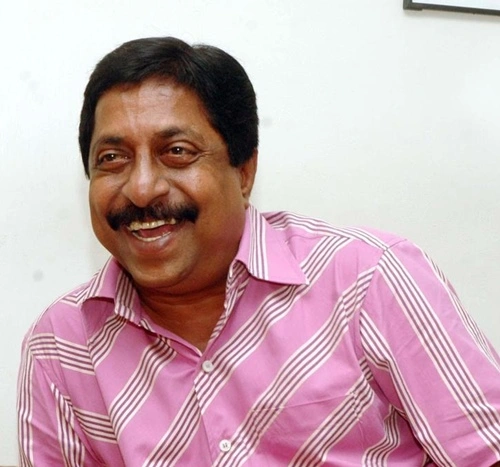
In the lush, cinematically obsessed landscape of Kerala, where celluloid often
dictates the rhythm of reality, few figures have wielded the pen and the persona
with as much surgical precision as Sreenivasan. A polymath of the Malayalam
film industry—screenwriter, director, actor, and producer—Sreenivasan, who
passed away in late 2025, occupied a singular space in Indian cinema. He was not
merely an entertainer; he was a master satirist, a social cartographer who
mapped the insecurities, hypocrisies, and endearing follies of the Malayali
middle class with a wit so sharp it felt like a caress before the sting.
To understand Sreenivasan is to understand the evolution of Kerala’s social
consciousness over the last five decades. He did not traffic in the hyper-
masculine heroics of his contemporaries. Instead, he championed the
‘everyman’—the flawed, often delusional, yet profoundly relatable figure
struggling against the tides of modernity, politics, and tradition.
The Aesthetics of the Ordinary
Sreenivasan’s genius lay in his rejection of the grandiose. While the 1980s and
90s were elsewhere defined by explosive action and melodrama, Sreenivasan
looked inward. His screenplays were studies in sociological observation.
Whether he was portraying a man obsessed with his own physical inadequacies
in the cult classic Vadakkunokkiyanthram (1989) or a lazy husband
masquerading as a spiritual seeker in Chinthavishtayaya Shyamala (1998), he
utilized the mirror of cinema to reflect the spectator’s own shadow.
His prose—written in a colloquial yet intellectually dense
Malayalam—demolished the pedestal upon which the Malayali ego often rests.
He possessed an uncanny ability to find the ‘tragic-comic’ in the mundane. In his
hands, a simple job interview or a domestic squabble became a stage for a larger
discourse on the unemployment crisis, the vanity of the ‘Gulf-dream’, and the
erosion of agrarian values.
The Political Iconoclast: Sandesam and Beyond
Perhaps his most enduring legacy as a social commentator is the 1991 political
satire Sandesam. In a state defined by intense political literacy and
partisanship, Sandesam was a revolutionary act. Sreenivasan, who wrote the
script and starred as the character Koteeshwaran, dismantled the performative
nature of party politics. He exposed how ideology often serves as a veneer for
personal failure and familial neglect.
The film’s famous dialogue regarding "Poland" has become an immortal
linguistic trope in Kerala, symbolising the absurdity of local politicians arguing
over global geopolitical shifts while their own backyards crumble. Sreenivasan
did not take sides; instead, he stood on the periphery, mocking the very idea of
blind allegiance. By doing so, he encouraged a generation to look at politics not
as a religion, but as a flawed human endeavour. It was social commentary at its
most potent—accessible enough for the masses, yet profound enough to be cited
in academic circles.
The Critique of the Malayali Diaspora
As the 1980s saw a mass exodus of Keralites to the Middle East, Sreenivasan
became the primary chronicler of this demographic shift. Films
like Varavelpu (1989) were heartbreakingly accurate depictions of the 'Return
Emigrant'—men who spent their lives building sandcastles in the desert only to
find their homeland hostile to their return.
Through the character of Murali, Sreenivasan critiqued the militant trade
unionism and the bureaucratic red tape that stifled entrepreneurship in Kerala.
He highlighted the irony of a society that survived on foreign remittances but
remained ideologically allergic to the labour that generated them. These films
were not mere comedies; they were cautionary tales that forced the state to
confront its own structural contradictions.
Masculinity and the Fragile Ego
Sreenivasan’s work also delved into the fragile architecture of Indian
masculinity. Unlike the stoic, invincible heroes of the era, Sreenivasan’s
characters were often besieged by inferiority complexes.
In Vadakkunokkiyanthram, which he also directed, he explored the psychological
rot of jealousy and self-loathing. Dineshan, the protagonist, remains one of the
most sophisticated character studies in Indian cinema—a man whose inability to
believe he is worthy of love leads to his inevitable descent into paranoia.
By playing these roles himself, Sreenivasan subverted the traditional 'hero'
archetype. His slight frame and deadpan delivery became symbols of
authenticity. He taught the audience that there is more truth in a man’s
insecurities than in his triumphs.
A Legacy of Satire
In his later years, Sreenivasan continued to observe the changing winds of the
21st century. Even as he battled health issues, his collaboration on films like Njan
Prakashan (2018) showed that his nib had not lost its edge. He turned his gaze
toward the ‘New Gen’ Malayali—ambitious, tech-savvy, yet frequently devoid of
a moral compass.
His passing in December 2025 marked the end of an era, but his influence
remains ubiquitous. His sons, Vineeth and Dhyan, carry forward his cinematic
lineage, yet the specific brand of Sreenivasan-esque' satire remains inimitable.
He was the court jester who was secretly the wisest man in the room.
Sreenivasan’s body of work reminds us that cinema, at its best, is a civic tool. It is
a way for a community to laugh at itself so that it might eventually heal. He
stripped away the pretensions of the intellectual and the illusions of the
commoner, leaving behind a naked, honest portrait of a society in transition. In
the grand tapestry of world cinema, Sreenivasan will be remembered as the man
who looked at the ordinary and saw the extraordinary, the man who spoke truth
to power not through a megaphone, but through a wry, knowing smile.