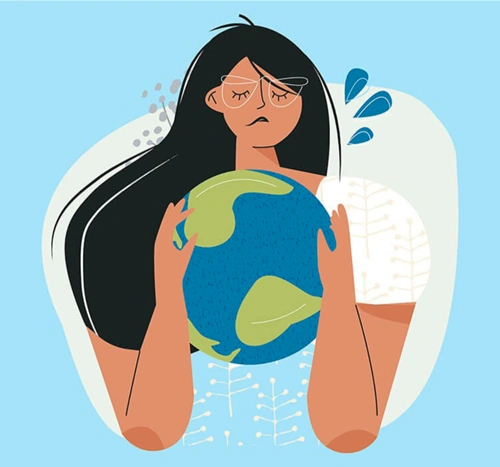
Climate change is increasingly being recognised for its effects on both the environment and
mental health. As extreme weather events and environmental degradation worsen, many
people experience increased anxiety, depression, and stress. This article investigates the
connections between climate change and mental health, emphasising the critical need to
address both environmental and psychological resilience in our response to the global
crisis.
Direct Effects of Natural Disasters: Natural disasters, exacerbated by climate change, cause
immediate trauma. Hurricanes, floods, and wildfires can result in PTSD, anxiety, and
depression. Survivors frequently experience the loss of loved ones, homes, and livelihoods,
which exacerbates feelings of grief and helplessness.
Chronic Stress and Anxiety: The ongoing threats posed by climate change cause chronic
stress. Concerns about future environmental conditions can lead to eco-anxiety. This
anxiety can be crippling, impairing daily functioning and quality of life.
Displacement and Migration: Climate change is driving migration by displacing
communities due to rising sea levels, droughts, and other environmental changes.
Displacement can cause feelings of instability, loss of identity, and social disconnection.
Vulnerable Populations
Certain groups are more vulnerable to the mental health implications of climate change,
including: Indigenous communities, which rely heavily on their environment for cultural
practices and sustenance, may experience significant disruptions to their way of life. Low-
income families may lack the resources to adapt to or recover from climate-related
disasters, which increases their stress and anxiety. Children and adolescents are especially
vulnerable to the anxiety caused by climate change, which can have an impact on their
development and future prospects.
Providing access to mental health resources is critical. This includes counselling services,
community support groups, and training mental health professionals to address climate-
related issues.
Creating resilient communities through engagement and collective action can help people
feel more empowered. Community gardens, local climate initiatives, and support networks
can help alleviate feelings of helplessness.
Raising awareness about the mental health effects of climate change can encourage people
to seek help and support. Educational programmes can also teach coping strategies for
managing eco-anxiety.
Advocating for policies addressing both climate change and mental health is critical.
Integrating mental health considerations into climate action plans can help ensure that
affected communities receive comprehensive support.
The intersection of global climate change and mental health is an urgent issue that requires
attention. We can build healthier, more resilient communities by acknowledging the
psychological effects of environmental change and prioritising mental health in climate
action.