Life is full of surprises and contradictions. I didn’t know that ordinary days could carry
such weight until the day everything changed. The day began quietly, tucked in routines
that felt familiar and safe – family conversations, shared meals, plans for the week
ahead. Nothing looked different. But beneath that normalcy, something was already
shifting. A storm was brewing – a storm that would shatter my world without
warning. I’ve never had any major medical illnesses, barring a persistent backache.
Riding the bike on bad roads seemed to be the only plausible explanation. But a routine
ultrasound scan to find the seriousness of my back pain threw a curveball I never
imagined: a suspected malignant tumour. A consultation at Bangalore’s Manipal
Hospital identified the tumour as ‘Retroperitoneal sarcoma’. My world paused. I stood at
the edge of the unknown. Ordinary life continued around me, but inside, everything felt
uncertain. Life divided itself without asking permission: before and after.
Why Me?
When the biopsy turned positive for retroperitoneal sarcoma, my reaction
was: Cancer? Me? How? Cancer – the word itself felt heavy, almost unreal, as if it
belonged in someone else’s story. Yet suddenly, it was mine. The diagnosis shook not
only my body, but also my faith. My “before” ended, and an unknown “after” began. I
believed in God and held on to my faith, but that did not stop the doubts, the questions:
Why me? What next? Will I survive this? The future seemed uncertain, and my strength
felt very small. I was in denial. There were questions I couldn’t answer, fears I couldn’t
soften, and a silence that lingered. I felt like an outsider in my own body. An outsider,
my body was conspiring against. I had several programmes planned. I was also
preparing to move to a new mission. All plans came to a standstill as I wrapped my head
around my diagnosis with growing trepidation.
The weight of this question can be agonisingly deflating. It shatters the minds and
wounds the souls. I was trapped in a world of conflicting emotions. Like many, I
questioned God’s silence more than His power. I asked God quietly: “Where are You in
this suffering?” There were moments when prayers felt empty. I persisted, but my
prayers felt broken. There were days I didn’t have the strength to form words –
moments when God felt silent, and I struggled to understand His will.
I asked heartfelt questions: “Why, O Lord, do you stand aloof? Why hide in times of
distress?” (Psalm 10:1), I kept turning toward Him. Like the psalmist, my prayer became
a cry: “Out of the depths I cry to you, O Lord; Lord, hear my voice!” (Psalm 130:1). The
Word of God became my anchor. I held on to the hope that “all things work together for
good for those who love God” (Romans 8:28). In that helplessness, the Rosary became my
prayer. When my mind was tired and my heart restless, the beads guided me. Even
when I could not pray, the Rosary prayed within me. It became my strength and drive.
Mother Mary was my guide and support.
Medicine Miracle
During this phase, I learned that faith and good medical care go hand in hand. Trusting
God did not mean ignoring the importance of finding the right doctors. In fact, seeking
the best possible medical care became one of the ways I lived out my faith. Finding
doctors who were knowledgeable, experienced and compassionate made a great
difference in my journey. A good doctor does more than treat the disease – they listen,
explain, reassure, and walk with the patient through fear and uncertainty.
I believe God works through doctors and medical professionals. Each correct diagnosis,
timely decision, and careful treatment plan was part of God’s healing work in my life. I
was fortunate to have found the best surgical oncologists – Dr. Shabber Zaveri and Dr.
Devesh Ballal. They explained the risks, the complexity, and the possible outcomes. With
the doctors’ reassurance, acceptance came, even if late and with great difficulty. The
numbness of my denial phase was wearing off, and reality kicked in hard. I sought a
shoulder, a hug, a safe space to let it all out without judgment or explanations.
I slowly came to terms with my condition. Most crucially, I discovered that
I wasn’t alone. Far from it. Many others with far deadlier forms of cancer had fought the
disease with courage and resilience. God often answers our prayers through human
hands, wisdom and science. Seeking the best medical care is not a lack of faith. It is an
act of responsibility, hope and trust in the God who heals through many means.
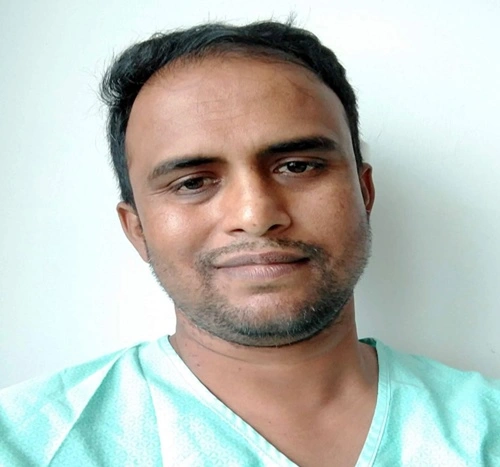
I withstood the 10-hour surgery to remove the sarcoma without needing to be shifted to
the ICU. Post-surgery pain was agonising; every breath, every move felt like a battle.
There were several days of physical weakness and emotional exhaustion. Treatment
demanded patience, courage, and trust – often all three felt scarce.
Yet, even during the most difficult moments, I discovered something deeply reassuring: I
was not alone. Support came in many forms. Doctors and nurses offered skilled and
compassionate care. “Fr Christy, you are an incredible man. You are always smiling, your
recovery is remarkable,” the words of my surgeon kept ringing in my ear, and I
bounced back. Family members stood close, offering strength when I had none. Friends
prayed, called, visited, and quietly reminded me that love can be a powerful medicine. In
all of this, I experienced God’s presence, not always dramatically, but gently and
faithfully, sustaining me through each day.
Waiting, Rising, Fighting, Healing
The journey through treatment was not easy. I also learned what it means to wait – to
wait for reports, to wait for outcomes, to wait for strength, to wait for hope. Yet, even in
those dark moments, I was never truly alone. God walked with me quietly, often through
the doctors, nurses, family members, friends, and even strangers who prayed for me.
Looking back, I see that those doubts deepened my faith. They stripped it of fear and
made it more honest. Cancer taught me that faith is not about having no questions, but
about holding on to God even when answers are unclear. A moment of suffering can
birth profound grace.
The sudden illness, which seemed a tragedy, became a source of inspiration to see the
extraordinary, to embrace life’s contradictions with faith, and to trust in the God of
surprises – the same God who turned water into wine, a manger into a throne, and a
cross into salvation. My resilience, deep faith, and the prayers of many helped me
navigate my grief in a Christian manner, offering solace during a deeply tragic period. I
was given the grace to accept and face the situation with positivity and serenity.
I didn’t dwell on fear or anxiety anymore. Instead, I chose to trust in the Lord and
respond with a smile. “The sickness may hit me, but it cannot defeat me. I will RISE,
I will FIGHT, and I will WIN,” was my attitude.
With the surgery done, my next challenge was chemotherapy. The thoughts of chemo
sessions, their side effects, felt like a punch in the gut. The nausea, fatigue, losing the
sense of taste like someone had turned down the flavour dial, and the irritability… With
each cycle of chemo, the intensity of the side effects varied. Each one knocked me out in
different ways. I became frail and fragile. However, every time the doctor said I was
tolerating the chemo well, thanks to my healthy lifestyle before the diagnosis, I was
encouraged to fight back.
The moment of truth came with the post-chemo PET scan. “You have done it,” the
doctors said. There was no trace of the sarcoma. A weight was lifted, not just off my
shoulders, but from the core of my being. Active surveillance will continue at regular
intervals with medication, but the worst is over.
The misconception that a cancer diagnosis is a death sentence is not true. Yes,
acceptance is difficult, but slaying the fears in one’s head is important before taking on
the intruder in the body. I firmly believe that cancer is a word and not a sentence, as I
move on. I embrace the love, faith and gratitude of everyone who helped me recover.
Because that’s all there is to life. “Every day is a day to be thankful… even when there
seems to be nothing else, there is hope,” says Ralph Marston.
The hardest part wasn’t always the physical toll, though real and unrelenting at times, it
was the uncertainty. It was the fear that crept in during quiet moments. Strength doesn’t
always look like bravery. Sometimes it looks like the small act of getting out of bed
when you don’t want to, or admitting that you are scared, or letting someone else be
strong for you.
Treatment was a long road, marked by small victories and painful setbacks. We learned
to celebrate what once felt insignificant: a good test result, a day without nausea, an
evening that almost felt normal. My family became my anchor, even as we all struggled
in our own ways. Cancer tested us, but it also revealed a depth of love and resilience we
didn’t know we possessed. Cancer is not meant to be faced alone. I remain indebted to
my family—the ultimate human sanctuary in whose warm embrace you feel loved and
never alone. There is no substitute for a kind and comforting home environment.
My sisters were willing to take a break from their lives to accompany me to the doctor,
to be at my bedside in the hospital, and care for me for 5 months. I don’t believe cancer
happens for a reason. But I do believe that love grows deeper in the presence of
hardship, and that families find ways to carry one another through unimaginable
seasons.
A little extra makes a big difference. For instance: an extra smile, an extra eye contact, an
extra hand to help someone in need, an extra word of encouragement to someone
struggling to rise, a tighter, warmer hug. Family and friends quickly rallied around
me during this difficult journey, some reaching out by phone and others visiting. Some
close friends visited almost every chemo session, like a Kohli fan, never missing a single
match. It was both shocking and comforting to see how much love surrounded me. And
yes, it does take a village to nurture someone.
Cancer left its mark on my body, but it also reshaped my heart. I value relationships
more, live more mindfully, and hold faith more firmly. The experience taught me that
suffering can deepen compassion, and that hope can grow even in the most unlikely
places. My story is not just about illness and recovery; it is about family, faith and the
quiet strength that emerges when we face life’s hardest challenges together.