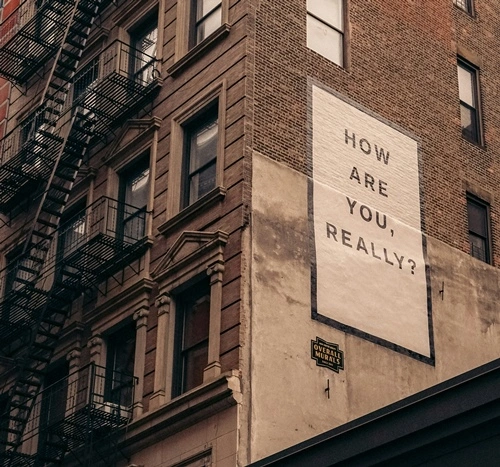
In a country rich in culture, diversity and also various advances in technology it is quite
concerning about the alarming rates of mental health issues. On this note, the youths of
today have realized the importance of mental health regardless of the stereotypes,
superstitions and stigmas that surround mental health.
Mental Health as defined by THE WHO, “is a state of well-being where an individual realizes
their own abilities, can cope with the normal stresses of life, work productively, and make a
contribution to their community”. The government of India has taken efforts to promote
the importance of mental health by organizing campaigns and setting up mental healthcare
centers.
The stigma surrounding mental health it quite a difficult barrier to overcome. When it
comes to India, people tend to belittle people when it comes to the mental health aspect.
Many people still believe that “mental health isn’t important”, “depression isn’t real”,
“people who go to therapy are weak”, “why go to therapy when you have friends”, etc. On
the other hand, it has also been normalized to diagnose people randomly without knowing
any verified information of the mental disorder, “you are so dumb, do you have autism?”
“Why are you so hyperactive?” “You are such a neat freak, do you have OCD?”, “I’m
depressed, I missed my flight!” and so on.
Families often feel pressured to make sure their children are considered “normal” by
society, they must understand that there is nothing wrong with going to therapy, seeking
help or taking care of their mental health. To make them understand that it is an honest
health issue and not a weakness, more awareness about mental health should be given.
Furthermore, the working class should also realize the importance of mental health so that
they can take care of themselves and normalize it for the further generations as well. Even
though the government has tried to promote mental health awareness and so have many
NGOs but the mindset hasn't changed in some parts of our country.
On the other hand, recently the rate of people going to therapy has increased which shows
that mental health care is being taken seriously. Therapy has been normalized which is a
big step for a country like India which is bound by tradition and belief systems. India does
face a treatment gap due to shortage of professionals.
Therapy is not normalized to the rural or the semi-urban areas. It is considered luxury to
be able to get therapy due to the lack of professionals and cost. Rural and sei-urban areas
are not aware of the entire idea of mental health. As a practitioner, it would be really
challenging to navigate this challenge especially due the lack of awareness of mental health
and the entire stigma surrounding it.
Families need to be aware of the symptoms of the mental disorder and help that member
whenever and wherever necessary. It should be normalized to make sure that that the
member is not feeling like a burden or feeling their disorder is a character flaw. Knowledge
about the disorder could help everyone feel a little at ease and be aware of what could
happen etc., Families should also be active listeners and not neglect any feelings or
opinions. Families should also understand the importance of the way they express their
care, it shouldn’t sound blameful but be more acknowledging.
It is observed that many youths are seen with a high rate of disorders like depression and
anxiety, there are various factors that contribute to that like academic pressure, social
media and a fast-paced lifestyle. When it comes to academic pressure, the weight of
aspirations which hold various competitive exams and the need to prove themselves and
others. Competitive exams like NEET, JEE, SATS, etc., tend to be very stressful which leads
the deteriorating mental health.
The result pressure can also significantly impact the mental health of adolescents. On that
note, the entire idea of a “picture perfect” life that is portrayed in social media pressures
them unknowingly to have a similar life. Beauty standards and lifestyle choices become
stressors.
The Fear of Missing Out (FOMO), is a serious cause of anxiety issues, the continuous feeling
of that makes them feel their life is lacking. Youths also tend to fall into the dopamine trap
and forget the true meaning of life and happiness. Doomscrolling and isolation can also
impact the mental health of individuals. Practical measures could be maintaining a healthy
screen time, maintaining boundaries, practicing mindfulness, the idea of “social detox”
could really help as well and journaling could really help processing emotions.